What is the most universally flattering and durable nail shape?
Oval and Squoval are the gold standards. Oval gently mirrors the natural curvature of the cuticle while optically slimming short fingers. Squoval combines the structural strength of a straight flat edge with softly rounded corners, making it virtually immune to everyday chipping, snagging, and lateral stress fractures.
Next Step in Your Routine: Once you determine your ideal shape, explore our Master Gel Nails Guide to lock in your manicure for 3 weeks, or view our Press-On Nails Sizing Guide for pre-shaped salon sets.
Anatomy 101: Matching Cuticles & Finger Length
Choosing a nail shape should never be based solely on trending social media images. The most aesthetically pleasing manicures adhere to fundamental anatomical principles known as The Mirror Rule.
Look closely at the base of your bare fingernail where the eponychium (cuticle frame) meets the nail plate. Is the curvature a deep, soft semi-circle, or is it nearly straight and flat across?
- Curved Cuticle Line: If your cuticle contour is rounded, shaping your free edge into an Oval or Almond creates an elegant symmetrical frame that balances the entire finger.
- Flat / Straight Cuticle Line: If your cuticle boundary runs flat and angular, a Squoval or soft Square shape visually harmonizes with your natural growth pattern.
Wide Nail Beds & Shorter Fingers
If your fingers feel wide or short, avoid sharp square shapes which visually truncate the hand. Instead, opt for Almond or Oval. The inward diagonal taper of the sidewalls guides the observer's eye vertically, creating an instant slimming effect.
Long, Slender Fingers & Narrow Beds
If you have naturally long, piano-playing fingers, aggressive stiletto or extra-long almond shapes can make hands look skeletal. A crisp Square or modern Short Coffin balances length by introducing grounding horizontal lines.
Oval vs. Almond: Optical Elongation
Oval and almond are frequently confused, but their geometry and structural strength differ significantly:
Classic Oval: The sidewalls remain straight until just past the hyponychium (where the nail leaves the skin), at which point they curve smoothly into a rounded, egg-shaped arch. Oval requires minimal length (2–3mm of free edge) and retains substantial lateral strength because the stress points remain supported.
Refined Almond: Named after the sweet almond nut, this silhouette features sidewalls that taper continuously inward from the nail groove toward a softly rounded central peak. Almond requires longer natural nails or extensions (at least 4–6mm of free edge) to prevent the taper from looking triangular.
Verdict: If you work in an office with moderate keyboard typing and want sophisticated elegance, choose Oval. If you love a chic, fashion-forward aesthetic that slims wide knuckles, choose Almond.
Short Coffin & Ballerina: Edgy Modern Geometry
The Coffin shape (also known as Ballerina) has dominated modern nail art trends. Characterized by straight sidewalls that taper sharply toward a flat, squared-off tip, coffin delivers high-fashion drama.
However, the physics of a coffin shape on natural nails present real engineering challenges:
- Apex Dependence: Because the tip is abruptly squared off at a narrow width, sudden impacts generate high shearing torque at the lateral sidewalls. On bare natural nails, coffin edges frequently split right at the stress line.
- The Short Coffin Advantage: By keeping the length moderate (short coffin), you enjoy the sharp geometric styling while minimizing lever-arm breakage risk. Short coffin sets are particularly durable when applied as Full-Cover Press-On Tips or structured builder gel overlays.
Nail Shapes: Structural Integrity & Anatomy Compatibility
| Nail Shape | Structural Strength | Best Finger Anatomy | Snag Resistance | Recommended Product |
|---|---|---|---|---|
| Round Short | Exceptional (10/10) | Wide nail beds, short fingers | Zero snagging | Natural nail + Gel Polish |
| Classic Oval | Very High (8.5/10) | Curved cuticle lines, medium fingers | High resistance | Natural nail or BIAB |
| Almond | High (7.5/10) | Short-to-medium palms, wider nail beds | Moderate | Builder Gel / Full Cover Tips |
| Squoval | Very High (9/10) | Universal; fits all finger types | Very high resistance | Natural nail or Rubber Base |
| Short Coffin | Moderate (6.5/10) | Narrow nail beds, longer fingers | Corners chip without apex | Hard Gel / Press-Ons |
| Square | High (8/10) | Long, slender fingers with straight cuticles | Corners prone to catching | Acrylics / Hard Gel |
| Stiletto | Low (4/10) | Slender hands; editorial wear | Requires continuous vigilance | Sculpted Hard Gel / Acrylic |
Square & Squoval: Crisp Angles vs. Soft Corners
The debate between sharp square and soft squoval centers around practicality versus crisp definition:
Classic Square
Straight sidewalls with a crisp, 90-degree flat horizontal edge.
- Delivers a bold, structured, graphic appearance.
- Sharp 90° corners easily catch on knit sweaters and hair.
- Natural nails tend to curl inward at the outer corners as they dry.
- Ideal pairing: Short lengths with Acrylics or hard gel overlays.
Universal Squoval
A flat horizontal edge with softly beveled, rounded outer corners.
- Combines the broad structural strength of square with the comfort of oval.
- Eliminates sharp corners, reducing chipping by over 80%.
- Flattering on almost every finger shape and cuticle type.
- Ideal pairing: Natural bare nails, soft gel polish, and BIAB.
Round Short: The Break-Proof Daily Standard
If your daily routine involves heavy keyboard typing, nursing, cooking, active athletics, or gardening, Round Short is your undisputed ally.
A round nail follows the exact natural curvature of your fingertip, keeping the free edge within 1 to 2 millimeters of the hyponychium. Because there are zero corners or extended edges, it is physically impossible to bend the nail backward or catch it on clothing.
For those currently rehabilitating thin, peeling nails after acrylic removal, round short is the mandatory clinical baseline. It eliminates snagging leverage entirely while new keratin regenerates from the matrix. Pair it with our Nail Health & Jojoba Therapy Protocol for rapid recovery.
Stiletto & Almond-Point: High-Drama Apex Rules
Stiletto nails taper aggressively down to a needle-sharp point. Unlike almond (which has a soft, rounded tip), stiletto is sharp, fierce, and unapologetically dramatic.
Crucial Structural Advisory for Stilettos:
Never attempt stiletto shaping on natural bare nails. Filing sidewalls into a sharp triangle removes the lateral stress walls that keep your nail plate intact. Without a thick, sculpted acrylic or hard builder gel apex directly over the stress zone (Zone 2), a stiletto nail will fold and snap under everyday pressure.
Mastering the 240-Grit Filing Technique
The secret to razor-sharp, salon-precise nail shapes at home lies in three strict filing rules:
- 1. Discard Coarse Metal Files & Emery Boards:
Coarse 100-grit files or metal rasps shatter the delicate keratin layers of natural nails, creating microscopic fissures that split within 48 hours. Always use a 240-grit fine wooden file or an etched glass crystal file on natural nails.
- 2. File in One Continuous Direction (No Sawing):
Vigorous back-and-forth "sawing" generates friction heat that tears the nail plate's dorsal layers. File smoothly from the outer corner toward the center of the free edge in fluid, single-direction strokes.
- 3. Hold the File at a 45-Degree Beveled Angle:
Tilt your file slightly underneath the free edge at a 45° angle rather than holding it perpendicular (90°). This automatically bevels the underside, sealing the keratin edge and preventing water from infiltrating between layers.
Which Product System Suits Which Shape Best?
Pairing the right nail enhancement product with your desired shape ensures maximum longevity:
Natural Nails
Round, Squoval, Short Oval
Protected best with flexible rubber base coat or 2 coats of soft gel polish.
Builder Gel (BIAB)
Medium Oval, Almond, Short Coffin
Self-leveling viscosity builds a reinforced apex that guards against bending.
Hard Gel / Acrylics
Long Coffin, Stiletto, Square
Ultra-rigid structural density maintains razor-sharp angles on long extensions.
Frequently Asked Questions
Frequently Asked Questions
Expert-verified answers to common questions about techniques, products, and safety.
What is the single strongest nail shape that resists breaking?
Round and squoval are scientifically the strongest nail shapes. By eliminating sharp 90-degree lateral corners and keeping the free edge curved along natural keratin stress lines, direct impact forces disperse evenly across the nail plate rather than concentrating at weak fracture points.
Which nail shape makes short or chubby fingers look longer?
Almond and oval shapes are universally the most elongating. By gently tapering the sidewalls inward toward a soft rounded tip, they create an unbroken vertical optical illusion that extends the perceived length of both your fingers and nail beds.
What is the key difference between coffin and ballerina nails?
While frequently confused, coffin nails feature straight sidewalls that taper sharply inward to a flat, squared-off horizontal tip with sharp corners (resembling a classic coffin). Ballerina nails feature softer, subtly curved sidewalls before reaching the flat tip, mimicking the curved satin toe of a ballerina pointe shoe.
Can I shape my natural nails into almond or coffin without extensions?
To achieve an almond or coffin shape on natural nails, your free edge must extend at least 4 to 5 millimeters beyond the fingertip. Furthermore, without the structural apex reinforcement of builder gel or BIAB, natural coffin corners tend to curl inward or crack at the lateral stress points.
How do I determine my natural cuticle shape?
Look closely at the proximal nail fold where your skin meets the base of your nail. If the line forms a gentle semi-circle, your cuticle is curved (best suited for oval and round). If it forms a relatively flat, horizontal boundary with distinct corners, your cuticle is square (best suited for squoval and square).
Related In-Depth Articles & Tutorials
Expert-tested guides on nail health, salon techniques, and at-home manicure care.
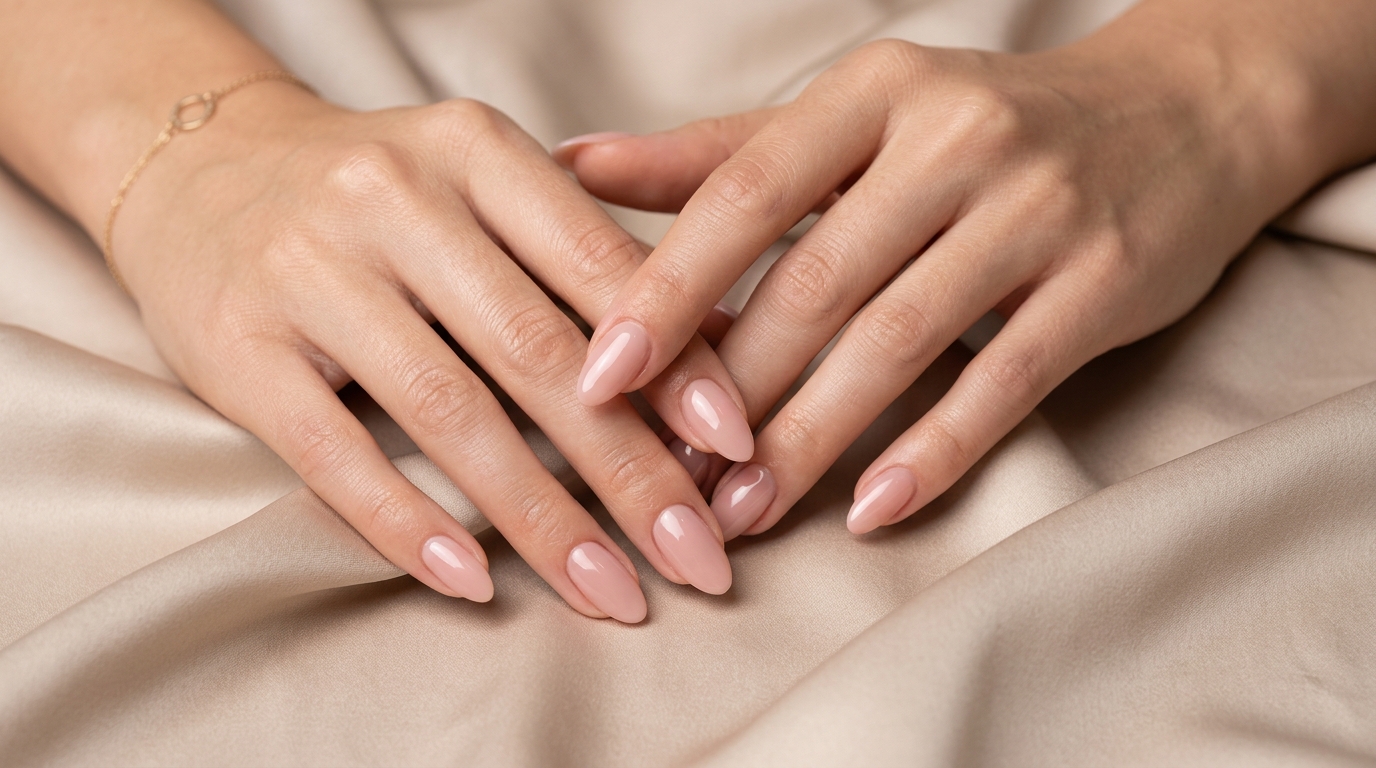
The Ultimate Gel Nails Guide: Science, Application & Care
Our complete master resource on gel manicures, UV/LED curing chemistry, salon vs. DIY longevity, and natural plate preservation.
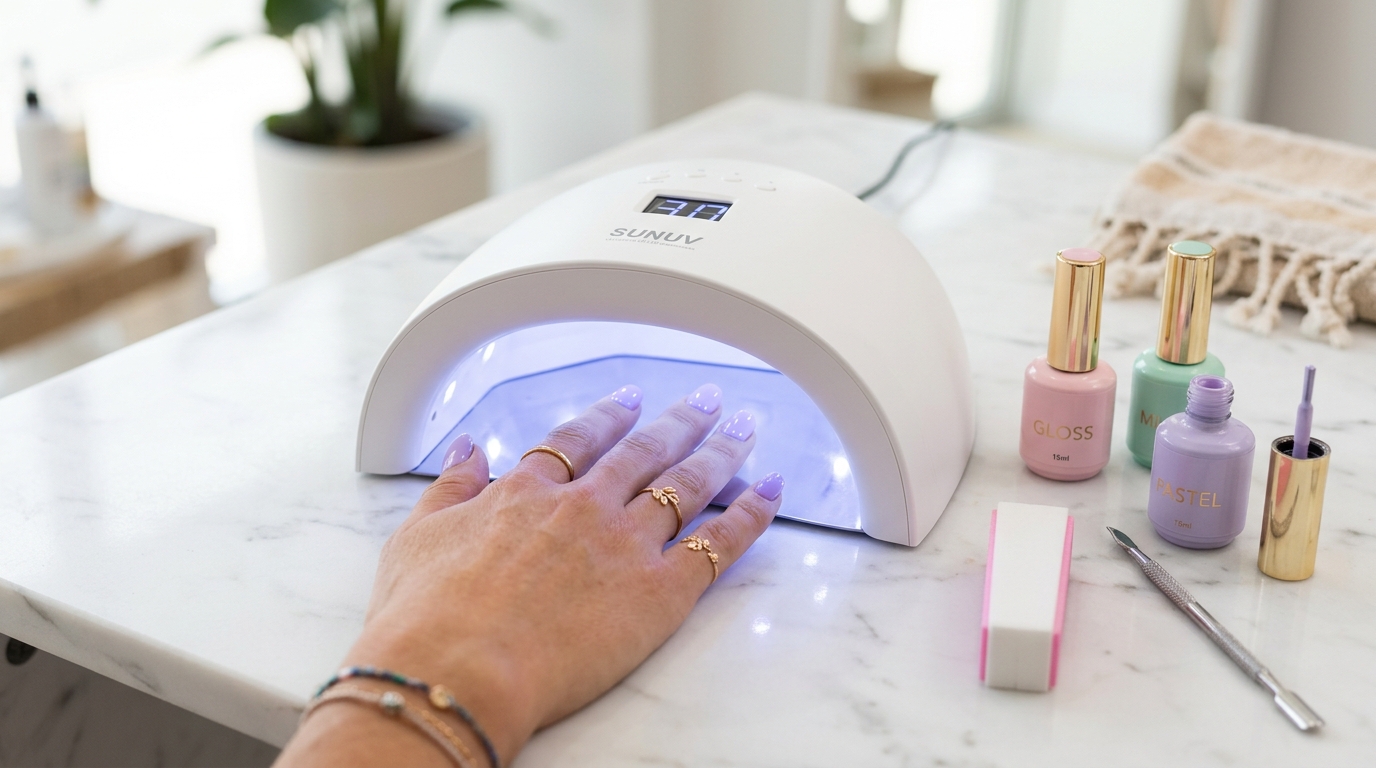 DIY Tutorial
 How to Do Gel Nails at Home: Step-by-Step DIY Guide
Achieve salon-quality 3-week wear at home. Covers curing lamp wattages, prep protocols, and zero-lifting secrets.
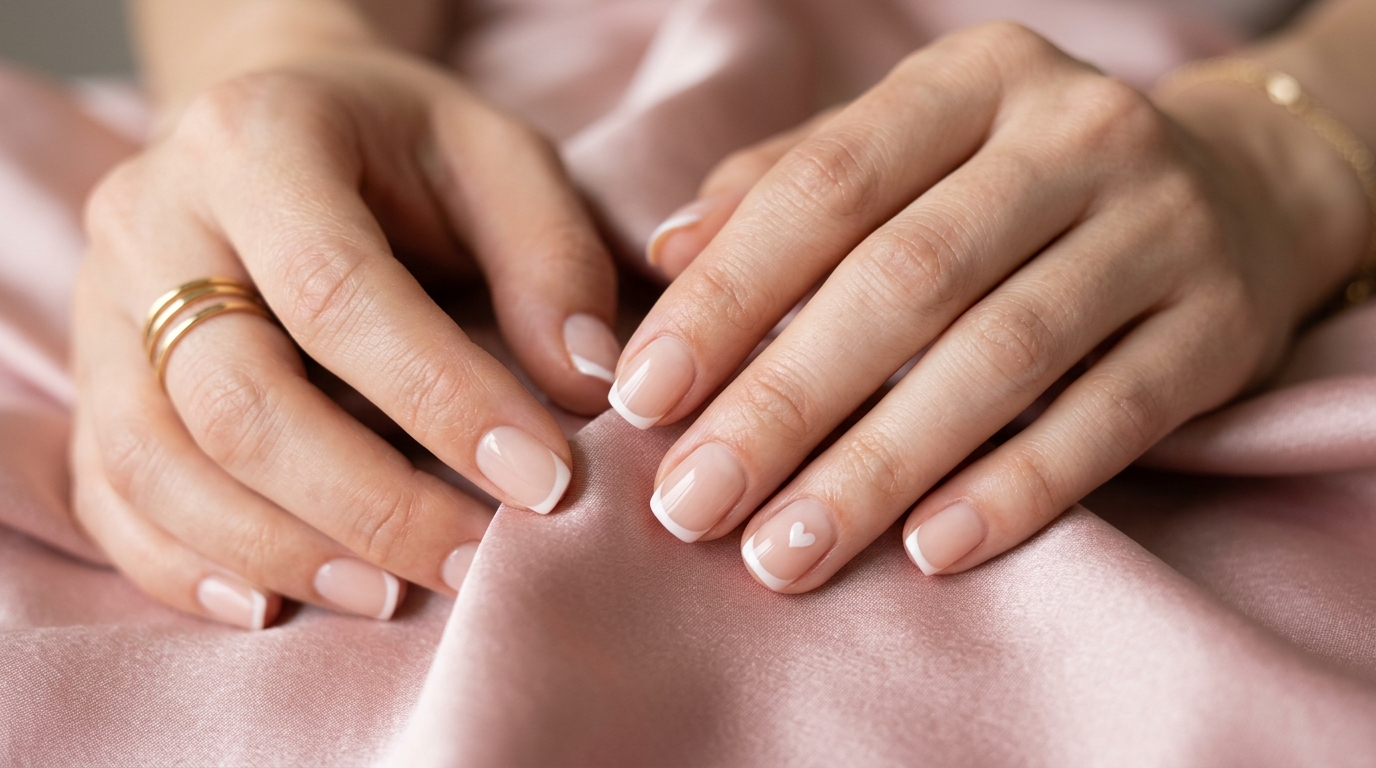 Trends & Sizing
 Short Press-On Nails: Sizing Chart & 3-Week Application
Universal millimeter sizing chart for wide and petite nail beds, adhesive tabs vs. glue, and reusable tips.
 Product Guide
 Best Nail Glue for Press-Ons: Chemical Safety & Hold
Why household super glue damages nail beds, cosmetic ethyl cyanoacrylate chemistry, and gentle soak-off removal.
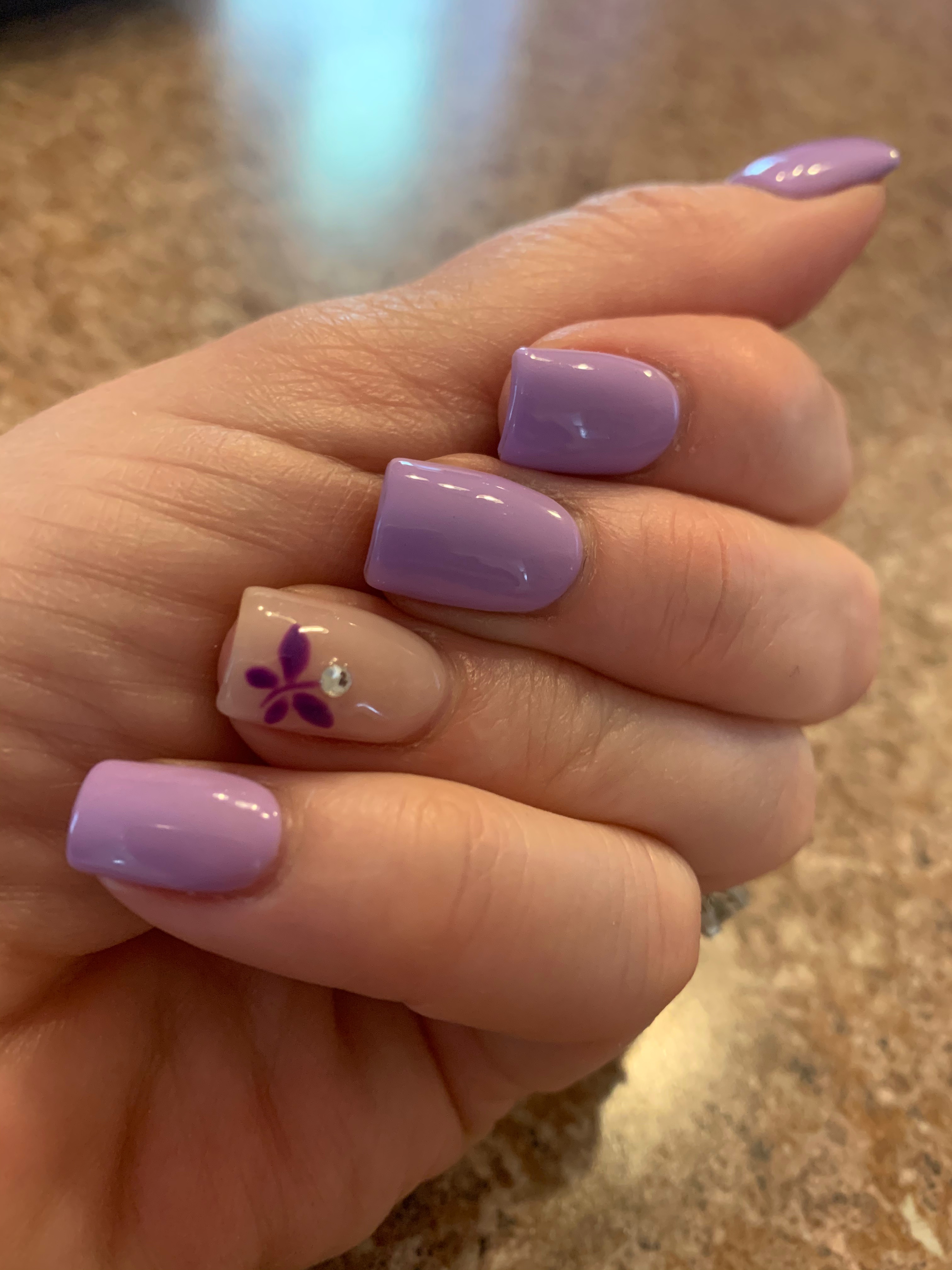 Comparison Guide
 Acrylic vs. Gel Nails: Longevity, Damage & Cost Comparison
Head-to-head breakdown of polymer powder vs. oligomer resins, durability ratings, flexibility, and nail plate health.
 Style Diagnostic
 The Complete Nail Shapes Guide: Geometry, Strength & Hands
Find the most flattering shape for your fingers: Oval, Short Coffin, Round, Almond, and Stiletto engineering.
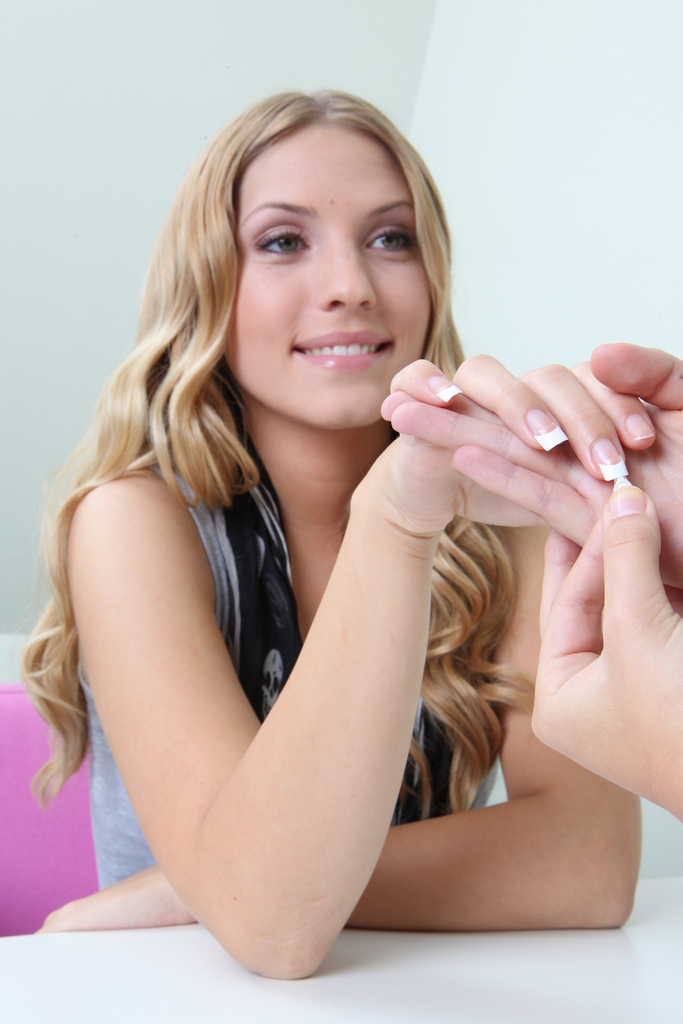 Care & Recovery
 Nail Health & Recovery Therapy: Grow Long Natural Nails
Dermatologist-reviewed 4-week protocol to heal damaged, bendable, or splitting nails after enhancements.