Explore Expert Nail Guides & Trends See What's Trending
Guide saved to your personal reading list
Gel Nails

Acrylic vs. Gel Nails: Which One Is Actually Healthier?

Polymer Chemistry, Elasticity, Salon Costs & Damage Comparison

Elena Rostova Editor-in-Chief & Master Nail Educator 15 min read
Verified by Elena Rostova • Master Nail Educator
Acrylic vs. Gel Nails: Which One Is Actually Healthier?

Editor's Key Takeaway

"The definitive comparison between acrylics and gel enhancements: chemical formulation, flexibility under pressure, salon pricing, and natural nail health."

1. Molecular Chemistry: Liquid & Powder vs. Pre-Mixed Oligomers

In professional beauty schools, the fundamental distinction between acrylic and gel enhancements comes down to polymer synthesis chemistry. Both systems belong to the broad acrylic chemical family, but they arrive at their hardened state through completely different chemical pathways:

Enhancement Attribute Traditional Acrylics (L&P) Modern Gel Systems (Hard/Soft)
Chemical Components Liquid monomer (EMA) + Powder polymer (PMMA) Pre-mixed urethane methacrylate oligomers
Curing Trigger Chemical catalyst (Benzoyl Peroxide) at room temp Optical photoinitiators activated by 365nm-405nm LED
Odor Profile Strong airborne vapor odor during application 100% completely odorless
Physical Flexibility Rigid, ceramic-like stiffness High elasticity matching natural keratin flex

Traditional acrylics mix a volatile liquid monomer with polymer powder to initiate self-curing in air. Gels, by contrast, are pre-polymerized oligomer resins that remain inert until optical photons trigger instant cross-linking under an LED lamp.
Interactive Salon Guide

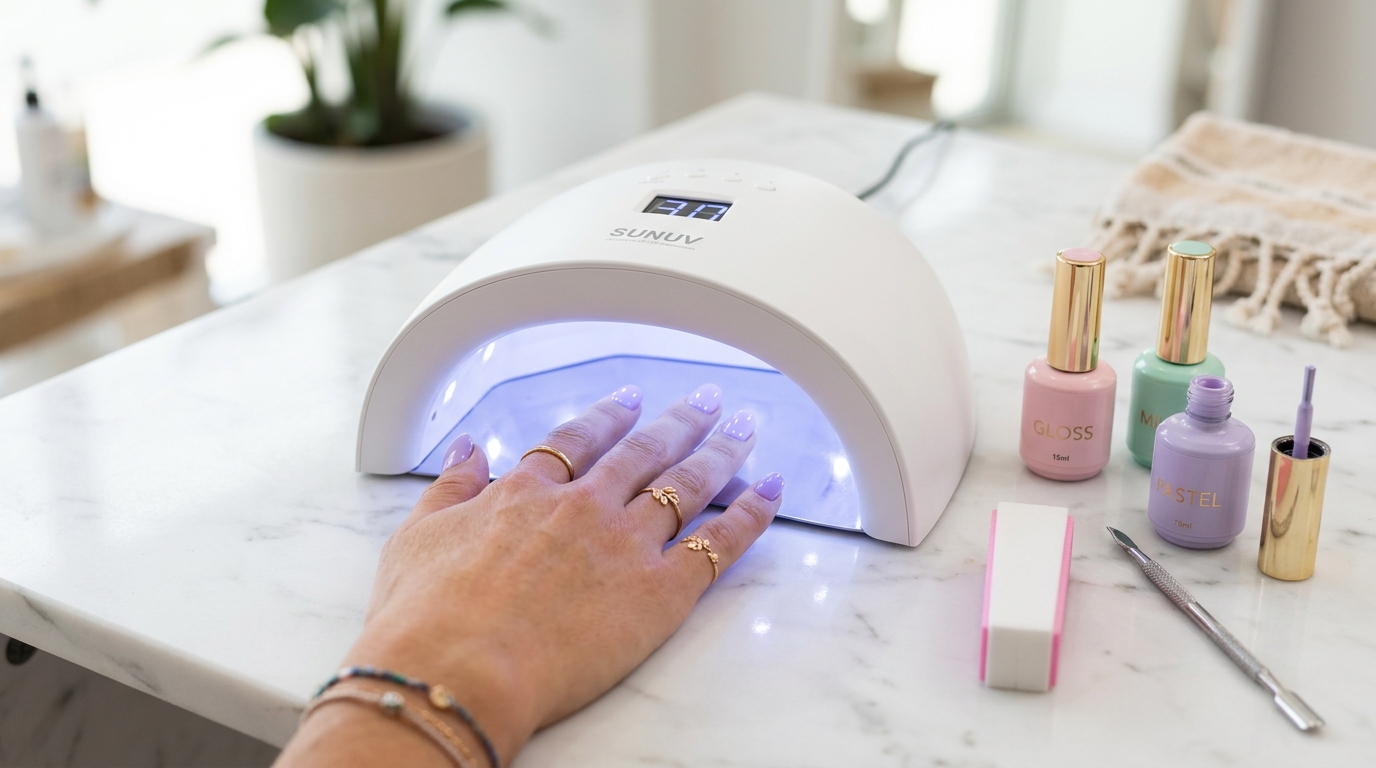
How Gel Polish Cures: Interactive Salon Studio

Pick your favorite polish shade, then click "Cure Under Lamp" to see how LED light sets liquid polish into a rock-solid, glass-like shine in 30 seconds.

Select Gel Polish Shade:

Selected Shade: Ballet Slipper Pink

30s
State: Liquid Polish Layer Needs 30s Curing
💡

How It Works: Unlike standard nail lacquer that air-dries by evaporating solvents over hours, gel polish contains photo-reactive resins. When exposed to salon LED light, the molecules cross-link instantly—creating a flexible, chip-proof glass seal that lasts 3 full weeks.

2. Mechanical Flexibility & Shock Absorption

When you accidentally bump your nail against a car door or drop a heavy object on your hand, how the enhancement responds to mechanical force determines whether your natural nail survives intact:

  • Acrylics (High Hardness, Low Flexibility): Acrylic behaves like fine bone china. It offers immense compressive strength against abrasion, making it virtually indestructible. However, because it cannot flex, a severe blunt impact acts as a stiff lever arm, often ripping the natural nail bed off the finger.
  • Gel Enhancements (High Elasticity): Gel formulas contain flexible urethane linkages that mimic the natural elasticity of human keratin. When subjected to sudden force, gel flexes slightly, absorbing and dispersing the kinetic energy harmlessly without transferring shear shock to the nail bed.

3. Salon Cost, Infill Schedules & Application Time

Cost and appointment length differ significantly between the two services:

  • Acrylic Full Sets: Average $45 to $75; infills cost $30 to $45 every 2 to 3 weeks. Application takes approximately 45 to 60 minutes.
  • Builder Gel / Hard Gel Sets: Average $65 to $110; infills cost $50 to $75 every 3 to 4 weeks. Application takes 60 to 90 minutes due to precision dry prep and self-leveling curation.

While gel carries a 20% to 30% higher upfront salon cost, many clients find gel infills last a full week longer without perimeter lifting, balancing annual expenditures.

4. The Nail Health Verdict: Which Causes Less Damage?

Dermatologically speaking, modern gel systems are significantly healthier for natural nail plates than traditional acrylics. Here are the clinical reasons:

  1. Gentler Plate Preparation: Gel adheres to a lightly buffed, de-shined plate. Acrylics often prompt aggressive e-filing with coarse sanding bands to create deep mechanical grooves.
  2. Zero Toxic Methyl Methacrylate (MMA): While illegal in most jurisdictions, cheap discount salons still occasionally cut acrylic monomer with MMA, which creates a bond so indestructible it permanently tears live nail beds upon impact. Gel products are MMA-free.
  3. Non-Destructive Removal: Soft gel dissolves completely in acetone in 12 minutes, sliding off cleanly without metal scraping tools.

Frequently Asked Questions

Reader Q&A • Expert Insights

Frequently Asked Questions

Expert-verified answers to common questions about techniques, products, and safety.

Which lasts longer: acrylic or gel?

Both can last 3 to 4 weeks between salon visits. However, hard gel tends to retain high-gloss shine and resist yellowing better than acrylic over time.

Can you switch from acrylic to gel without removing the set?

Yes! Your nail technician can file down the existing acrylic to a thin foundation layer and begin refilling new regrowth with builder gel, allowing your natural nail to grow out smoothly.

Why does my salon charge more for gel than acrylic?

Gel raw materials (high-purity urethane oligomers) are significantly more expensive to manufacture than acrylic powder, and gel application requires advanced precision brush control.