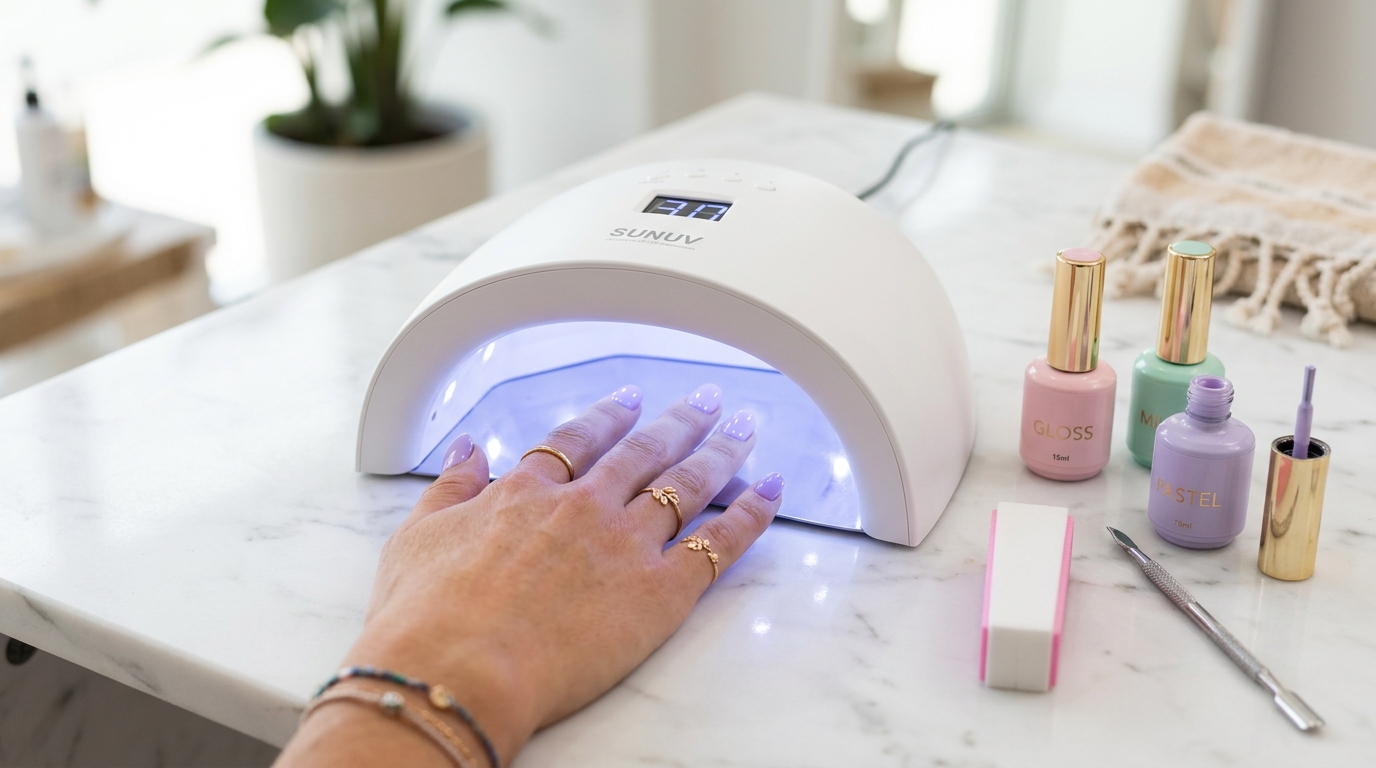
Gel nails have revolutionized modern beauty, becoming the gold standard for long-wearing, chip-resistant manicures worldwide. Unlike traditional solvent-based nail polish that relies on atmospheric air evaporation to dry over 1 to 2 hours, gel polish consists of specialized methacrylate oligomers and monomers that remain completely liquid until exposed to specific wavelengths of ultraviolet (UV) light.
Once exposed to ultraviolet rays emitted by high-output LED diodes (typically 365nm to 405nm), a photochemical reaction known as photopolymerization occurs in 30 to 60 seconds. The liquid molecules cross-link into a rigid, highly resilient, glass-like polymer network that bonds tenaciously to the keratin plate. The result is instant complete drying, mirror-like high gloss, and 14 to 21 days of completely chip-free wear.
Modern gel systems are divided into two main categories: soak-off soft gels (flexible formulas that dissolve cleanly in acetone) and non-porous hard gels (ultra-strong structural oligomers used for sculpting length that must be gently filed off).